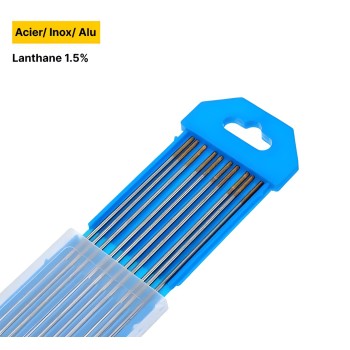
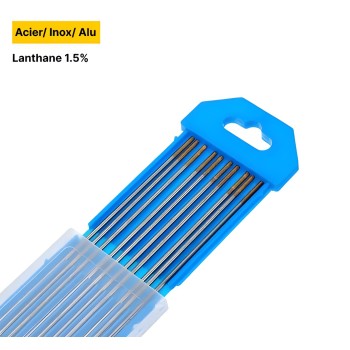
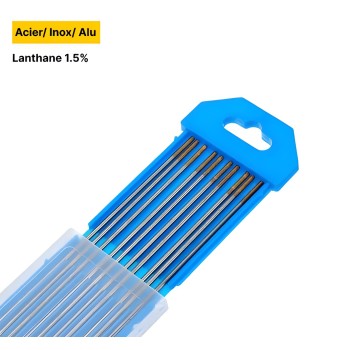
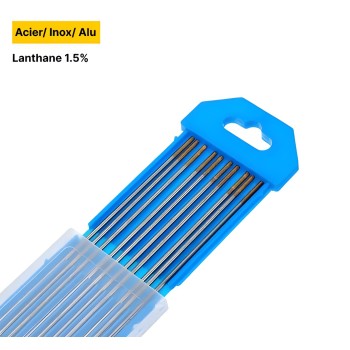
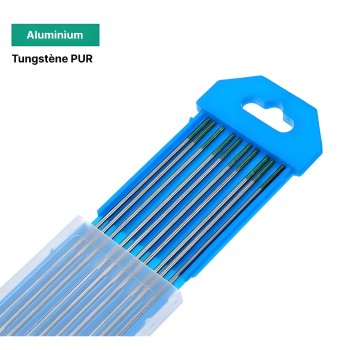
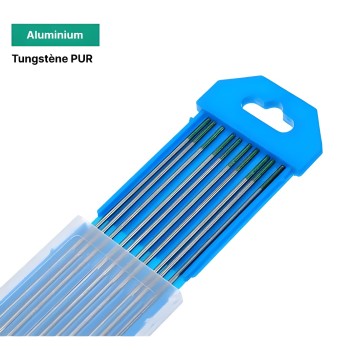
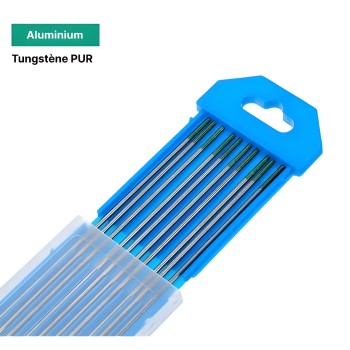
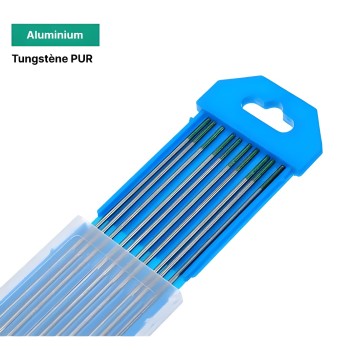
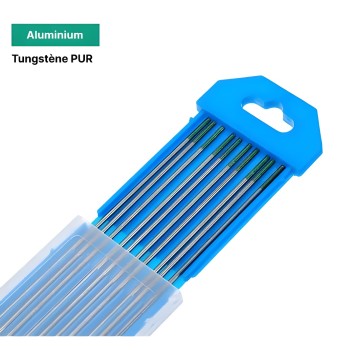
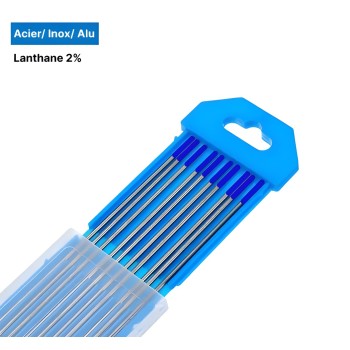
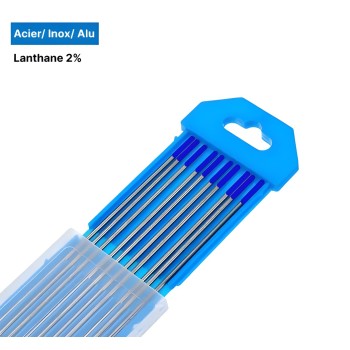
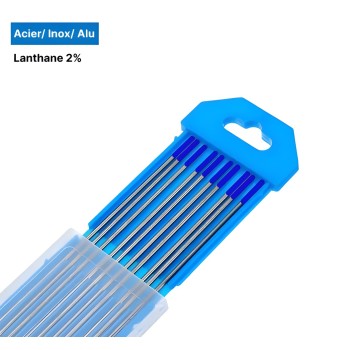
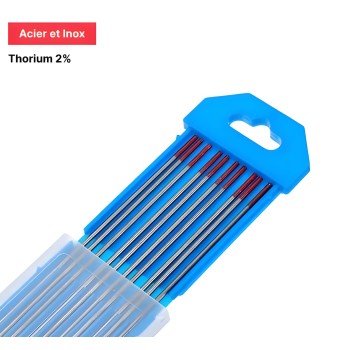
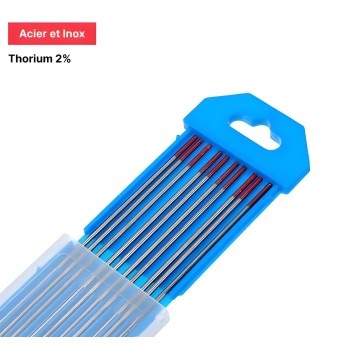
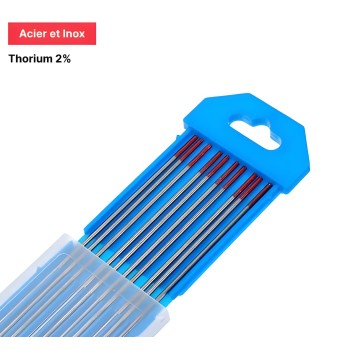
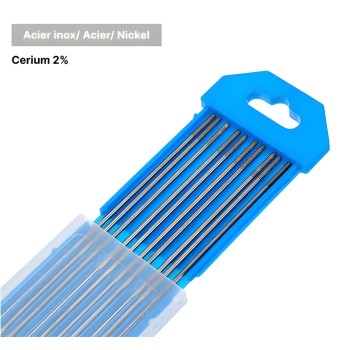
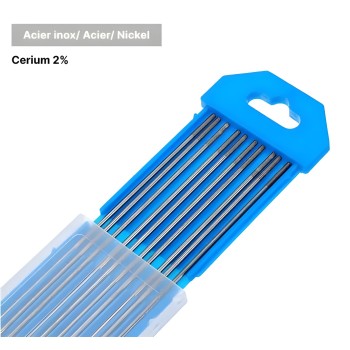
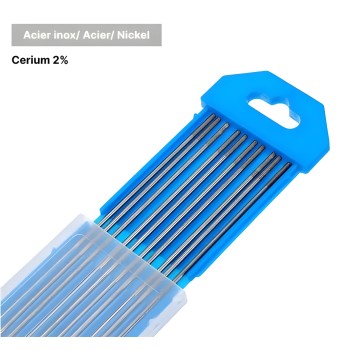
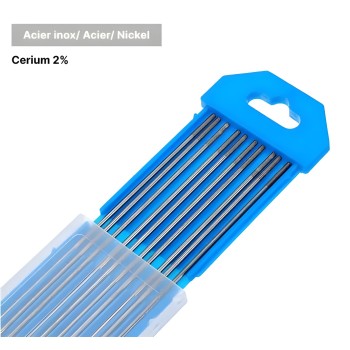
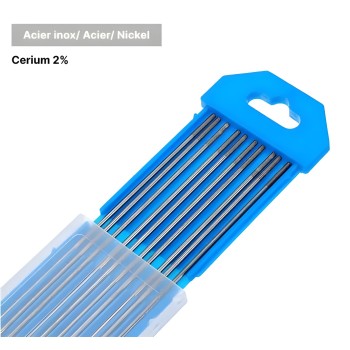
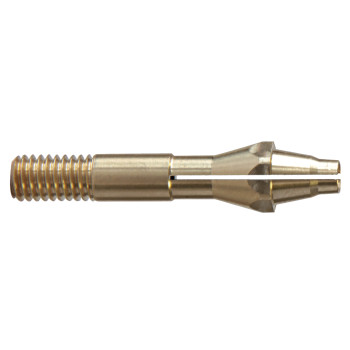
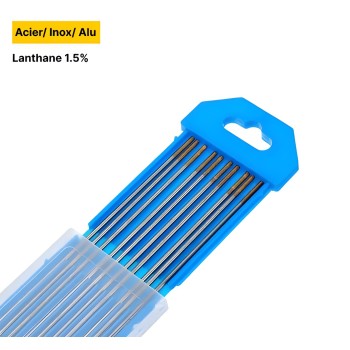
The tungsten electrode is the central element of TIG welding: it creates and sustains the arc without melting. Identified by a color code, it is chosen according to the metal and the type of current. Discover our selection of tungsten electrodes for TIG, in the grades and diameters suited to your work.
The role of the tungsten electrode
In TIG welding, the tungsten electrode is described as "non-consumable": brought to very high temperature, it generates the arc without being consumed like a coated electrode. Filler metal is added separately. The quality and sharpening of the TIG electrode directly influence arc stability and bead precision. It is a key consumable of the TIG machine.
The electrode color code
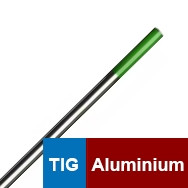
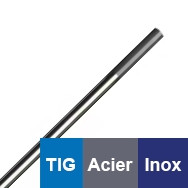
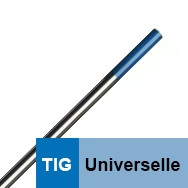
Electrodes are distinguished by a color code corresponding to their composition (pure tungsten or alloyed with various oxides). Each grade has its own characteristics: some are better suited to direct current (steel, stainless steel), others to alternating current (aluminum), and others are versatile. Knowing this color code allows you to choose the electrode suited to your metal and your machine.
Which electrode for which metal?
The choice depends on the current. For steel and stainless steel in DC TIG (direct current), stable and durable grades are preferred. For aluminum in AC/DC TIG (alternating current), a grade suited to that current is chosen. Versatile electrodes exist and are suitable for mixed use, which is practical for those who alternate between metals.
The right diameter
The diameter of the TIG tungsten electrode must be proportional to the amperage used. An electrode too thin for high amperage wears prematurely and destabilizes the arc; an electrode too thick for low amperage strikes poorly. Common diameters (1.6, 2.4, 3.2 mm) cover most applications, from the finest to the most powerful.
Sharpening: an essential skill
Sharpening the tungsten electrode is critical in direct current: the tip must be tapered lengthwise — never across — on a dedicated grinding wheel, for a stable and concentrated arc. In alternating current, the tip forms a small ball. Careful sharpening conditions bead precision and electrode service life.
Avoiding contamination
If the TIG electrode touches the weld pool or the filler metal, it becomes contaminated: the arc becomes unstable and the bead gets dirty. The tip must then be re-sharpened. To avoid this, maintain a slight distance between the electrode and the workpiece, and use a well-adjusted TIG torch with the correct nozzle and collet.
The service life of the electrode
A well-used tungsten electrode lasts a long time, as it does not melt during TIG welding. Its service life depends mainly on cleanliness (no contamination from the weld pool or filler), correct sharpening and a diameter suited to the amperage. At high amperage, an electrode too thin erodes quickly; properly sized and well protected by argon, it retains its tip and effectiveness over time. Post-flow gas, which maintains shielding after the arc is extinguished, also helps preserve it.
Versatile electrodes: a practical choice
For those who alternate between steel, stainless steel and aluminum, so-called versatile tungsten electrodes offer an interesting compromise: they avoid having to change electrodes with each metal, providing good performance in both direct current and alternating current. Without matching a specialized electrode for each use, they simplify the work and reduce consumable stock. Paired with a well-equipped TIG torch, they cover the essential needs of a multi-purpose workshop.
Sharpening and stock
Having a small stock of already-sharpened tungsten electrodes saves time in production: a contaminated tip can be replaced without prolonged interruption of work. A grinding wheel dedicated to tungsten, reserved solely for this purpose, also prevents cross-contamination and ensures a clean grind — the key to a stable and precise arc. Remember to protect sharpened electrodes in a suitable case to preserve their tip until use.
Our advice
To choose the right tungsten electrode, start with the metal and the current type (DC for steel/stainless steel, AC for aluminum), then select the diameter suited to your amperage. Pay attention to sharpening and avoid contamination. A versatile electrode is a good compromise for mixed use. Browse our selection of tungsten electrodes for successful TIG welds.
Frequently asked questions
What is the purpose of the tungsten electrode in TIG welding?
It creates and sustains the electric arc without melting (a "non-consumable" electrode). Filler metal is added separately. The quality and sharpening of the electrode directly influence arc stability and TIG bead precision.
What does the color code of tungsten electrodes mean?
The color indicates the electrode's composition (pure tungsten or alloyed with oxides). Each grade has its uses: some are suited to direct current (steel, stainless steel), others to alternating current (aluminum), and others are versatile.
What diameter tungsten electrode should you choose?
Proportional to the amperage: common diameters are 1.6, 2.4 and 3.2 mm. An electrode too thin for high amperage wears quickly and destabilizes the arc; too thick for low amperage, it strikes poorly.
How do you sharpen a tungsten electrode?
In direct current, the tip must be tapered lengthwise (never across), on a dedicated grinding wheel, for a stable and concentrated arc. In alternating current, the tip forms a small ball. A good sharpening conditions bead precision.


 Italy
Italy
 Germany
 Netherlands
 Croatia
 Denmark
 Finland
 Greece
 Ireland
 Portugal
 Norway
 Bulgaria
 Estonia
 Latvia
 Lithuania
 Poland
 Czech Republic
 Romania
 Slovakia
 Slovenia
 Hungary
 Spain
Spain



 2-year warranty