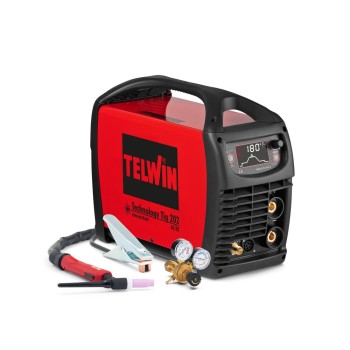
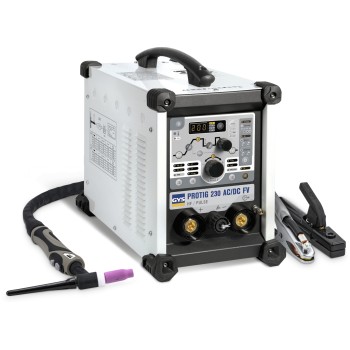
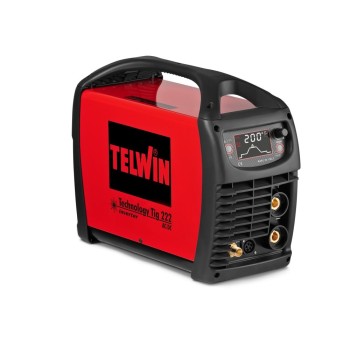
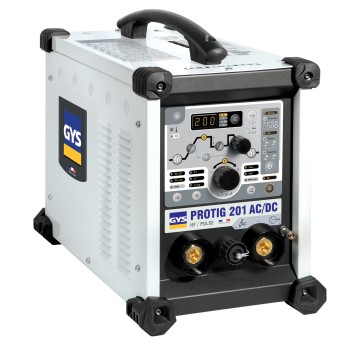
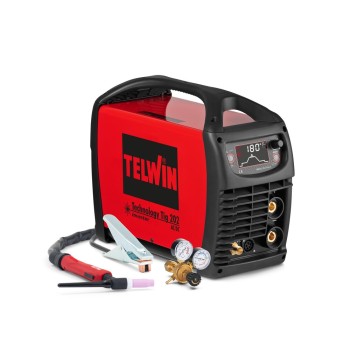
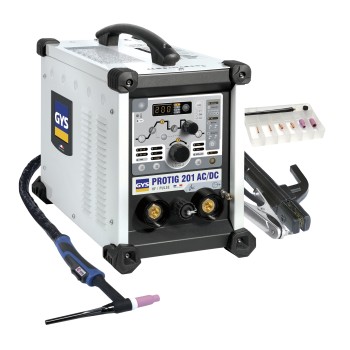
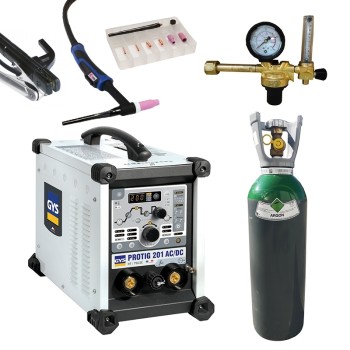
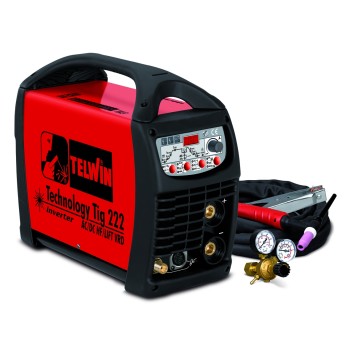
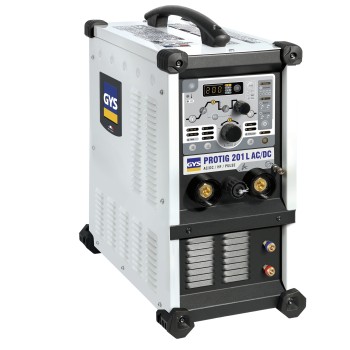
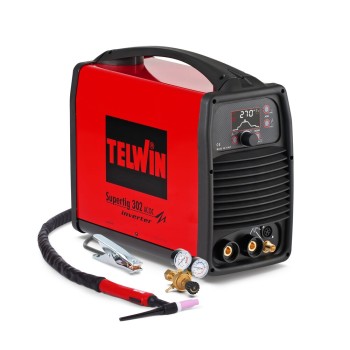
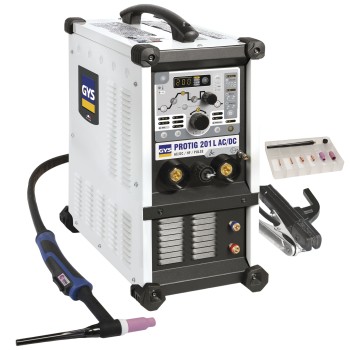
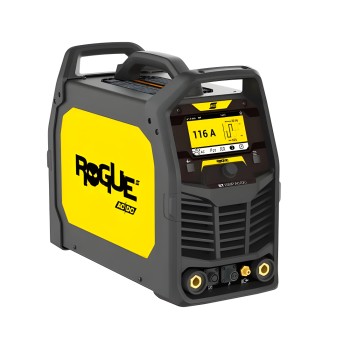
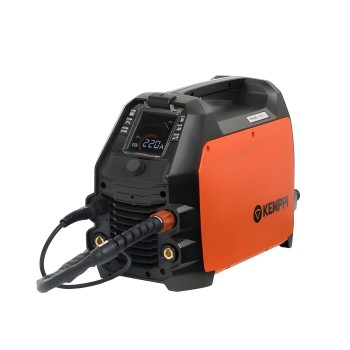
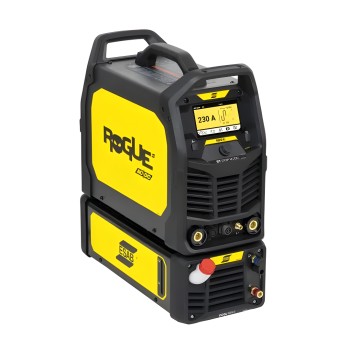
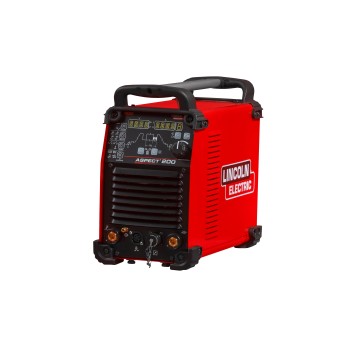
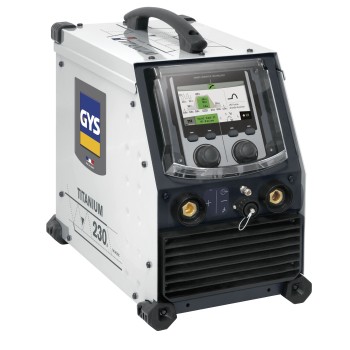
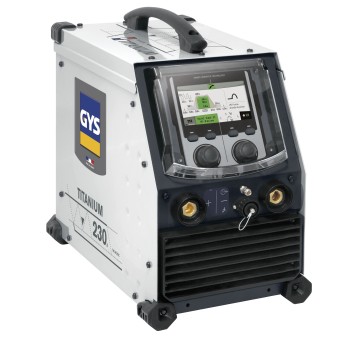
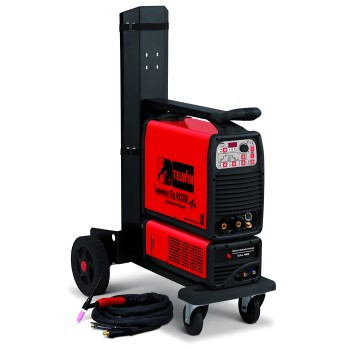
The aluminium welder is an AC/DC TIG welder capable of welding aluminium thanks to alternating current. Indispensable for this demanding metal, the alu welder offers the precision and finish of TIG welding on aluminium, steel and stainless steel. Discover our selection of AC/DC TIG welders.
Why a specific welder for aluminium?
Aluminium instantly develops a refractory oxide layer that melts at a much higher temperature than the metal itself. To weld it cleanly, alternating current (AC) is required to strip this oxide layer during welding. A TIG welder on direct current alone cannot do this: that is why the AC/DC TIG aluminium welder is essential.
The role of alternating current
In TIG aluminium welding, alternating current alternates polarities: one phase strips the oxide, the other penetrates the metal. This balance, adjustable on good welders, is the key to a clean bead on aluminium. The AC/DC TIG welder manages this current, where a DC welder is limited to steel and stainless steel. It is this capability that defines a true alu welder.
Steel, stainless steel and aluminium
The advantage of an AC/DC aluminium welding machine is its versatility: on direct current (DC), it welds steel and stainless steel with TIG quality; on alternating current (AC), it welds aluminium. A single machine thus covers all common metals in TIG, making it a rational investment for a workshop working with varied materials.
Required equipment
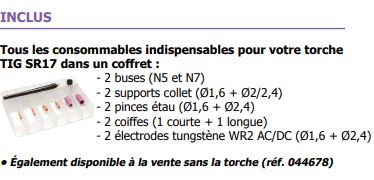
To TIG weld aluminium, the right equipment is needed: a tungsten electrode suitable for alternating current, pure argon, a well-equipped TIG torch and an aluminium filler metal of the appropriate grade (4043 or 5356). Cleanliness is essential: the aluminium must be cleaned just before welding with a dedicated stainless steel brush.
Useful functions
Aluminium welders often offer advanced settings: AC balance (cleaning/penetration balance), AC frequency (arc fineness), pulsed current and HF start. These functions improve control and finish on aluminium. For fine work, a foot pedal control allows the intensity to be adjusted in real time.
Achieving successful aluminium welds
TIG aluminium welding requires practice: heat management (aluminium dissipates heat quickly), impeccable cleanliness and torch/filler coordination. Start on offcuts to adjust the AC balance and intensity. With a good welder and proper preparation, clean and solid beads are achievable, meeting the demands of this metal.
Managing heat
Aluminium conducts heat very well and dissipates it quickly, which complicates TIG aluminium welding. A higher intensity is often needed at start-up, then adjustment as the workpiece heats up. Energy management, ideally with a foot pedal, allows the intensity to be adapted in real time and avoids both lack of fusion and burn-through. It is this mastery of heat that distinguishes a successful aluminium weld from a failed bead.
Preparation, a decisive step
With aluminium, cleanliness is not optional: it is a condition for success. Before welding, degrease the workpiece then remove the surface oxide with a stainless steel brush reserved exclusively for aluminium, just before the operation. Any trace of grease, moisture or oxide results in porosity. With a good AC/DC TIG welder, a suitable tungsten electrode and impeccable preparation, the alu welder produces clean and regular beads.
Practising to improve
TIG aluminium welding is learned through practice. Before tackling an important workpiece, practise on offcuts of the same grade and thickness to adjust the AC balance, intensity and filler feed speed. It is through testing that you learn to manage the rapid heat dissipation and recognise the correct behaviour of the weld pool. A few practice sessions lead to noticeable improvement and prevent ruining a finished workpiece on an aluminium welder.
Our advice
To weld aluminium, the AC/DC TIG welder is essential: only alternating current can treat the oxide layer. Choose a welder offering AC settings (balance, frequency) for optimal control, and equip yourself with a suitable tungsten electrode and pure argon. Versatile, it also welds steel and stainless steel. Browse our selection of aluminium welders.
Frequently asked questions
Why do you need an AC/DC TIG welder to weld aluminium?
Because aluminium develops a refractory oxide layer that melts at a much higher temperature than the metal. Alternating current (AC) strips this layer during welding, which a direct current welder alone cannot do. AC/DC is therefore essential.
Can an aluminium welder also weld steel?
Yes, that is the whole point of AC/DC: on direct current (DC), it welds steel and stainless steel with TIG quality; on alternating current (AC), it welds aluminium. A single machine thus covers all common metals in TIG.
What equipment is needed to TIG weld aluminium?
A tungsten electrode suitable for alternating current, pure argon, a well-equipped TIG torch and an aluminium filler metal of the appropriate grade (4043 or 5356). Cleanliness is essential: the aluminium must be cleaned just before welding with a dedicated stainless steel brush.
What is AC balance on an aluminium welder?
It is the setting that balances the two phases of alternating current: one strips the oxide, the other penetrates the metal. When properly set, the AC balance is the key to a clean bead on aluminium. It is ideally adjusted by testing on scrap pieces.
What is the price of an aluminium welder?
The price of an AC/DC TIG Welder - Aluminium - Steel - Stainless Steel depends mainly on the power output, duty cycle, brand and included features. Also compare the accessories provided, as they significantly affect the real cost of use.
Which TIG welder for welding aluminium?
To weld aluminium, an AC/DC TIG welder with alternating current, argon gas and suitable filler metal is required. A DC TIG alone is not suitable for standard aluminium.


 Italy
Italy
 Germany
 Netherlands
 Croatia
 Denmark
 Finland
 Greece
 Ireland
 Portugal
 Norway
 Bulgaria
 Estonia
 Latvia
 Lithuania
 Poland
 Czech Republic
 Romania
 Slovakia
 Slovenia
 Hungary
 Spain
Spain



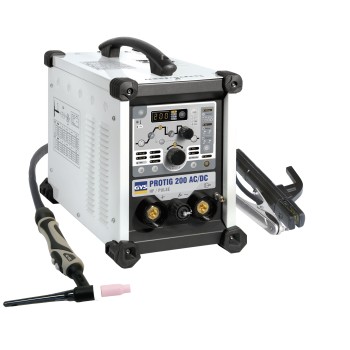
 2-year warranty